706 words, 4 minutes read time.
The escalating tensions in the Middle East, particularly with the UK’s consideration of military action against the Yemeni Houthi movement, have raised significant concerns among anti-war campaigners. The announcement by Defence Secretary Grant Shapps regarding the potential “direct action” against the Iranian-backed Houthi forces for their attacks on Israeli-associated ships in the Red Sea has been strongly criticized as “completely irresponsible” by opponents.
Lindsey German of the Stop The War Coalition has expressed grave concerns about the potential escalation in the Middle East, emphasizing that given the ongoing airstrikes by Israel in Gaza, further military involvement in the region is highly undesirable.
In response to the looming threat of military intervention, pro-Palestinian activists such as Palestine Action have vowed to target weapons manufacturers complicit in any attacks on Yemen. They have issued a clear warning that any British bombings in Yemen will be met with retaliatory actions aimed at all weapons manufacturers involved in attacks on both Yemen and Palestine.
The involvement of the US and Britain in the broader conflict, triggered by Houthi actions in response to Israel’s activities in Gaza, has been widely condemned as imperialistic. Grant Shapps’s reference to deploying gunboats to safeguard the “freedom of navigation” has drawn parallels to past imperialist endeavors. Furthermore, the recent destruction of three Houthi boats by the US Navy has further exacerbated the situation.
The strategic importance of the Bab el-Mandeb area, a crucial chokepoint for oil shipments, underscores the gravity of the conflict. Situated between the Red Sea and the Indian Ocean. This narrow passage is the world’s third largest choke point for oil shipments. More than six million barrels of oil pass through it every day, mainly on their way to Europe.
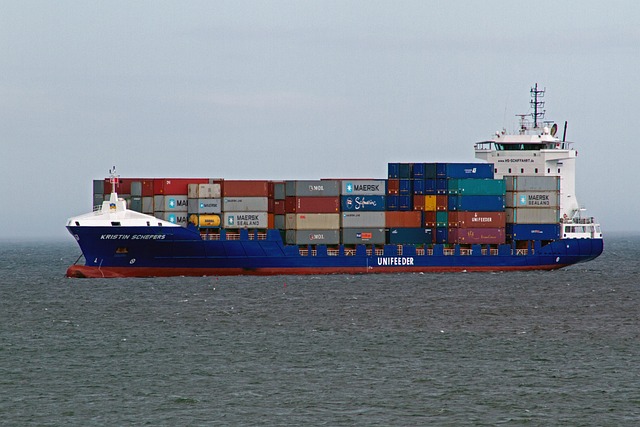
For an average ship, passing through Bab el-Mandeb and Suez takes nine days less than going around Africa. It is also cheaper—maritime experts estimate that the shorter route saves at least 15 percent on transport. The longer distances contain vessels are sailing around Africa have tightened the availability of ships and led to rates more than doubling since mid-December on the key Shanghai to Rotterdam route, rising to $3,100 per standard 40ft container from $1,400 according to Xeneta, a container market intelligence company.
Shipping giant AP Moller Maersk has rerouted ships from the Red Sea area around Africa “for the foreseeable future”.
The effects on price inflation could be significant. The rise in shipping costs could add 0.6% to global inflation if sustained this year according to the consultancy Oxford Economics.
Abdul-Malik Badreddin al-Houthi, the leader of the Houthi movement, has issued a direct threat to target US battleships in the event of any aggression against Yemen, underscoring the high stakes involved.
The origins of the Houthi movement can be traced back to the 1990s, stemming from resistance against government corruption in Yemen. Despite forging alliances with Iran, the Houthi group asserts its political legitimacy with deep roots in Yemeni society. The intricate political landscape in Yemen, involving regional powers such as Saudi Arabia and the UAE, has had dire consequences for the Yemeni populace.
The toll of the conflict, with an estimated 377,000 deaths and four million people displaced, has sparked profound concerns about the role of arms suppliers like Britain and the US. The Campaign Against the Arms Trade (CAAT) has highlighted the substantial arms exports to Saudi Arabia and the UAE, emphasizing the catastrophic impact on Yemeni civilians.
The Israeli defence minister Yoav Gallant said recently, “We are in a multi-front war. We are being attacked from seven fronts—Gaza, Lebanon, Syria, Judea and Samaria [the West Bank], Iraq, Yemen and Iran.
“This is the end of the era of limited conflicts. We operated for years under the assumption that limited conflicts could be managed, but that is a phenomenon that is disappearing. Today, there is a noticeable phenomenon of the convergence of the arenas.” (1)
As tensions continue to mount, the spectre of a major war looms, with the US and Britain spearheading the aggressive stance. The convergence of multiple arenas, encompassing Gaza, Lebanon, Syria, the West Bank, Iraq, Yemen, and Iran, paints a grim picture of a region standing on the precipice of widespread conflict.
By Patrick Harrington
Picture Credit
Image by john brookes from Pixabay
 THIRDWAY THINK-TANK | The Voice of the Radical Centre
Discussion
No comments yet.