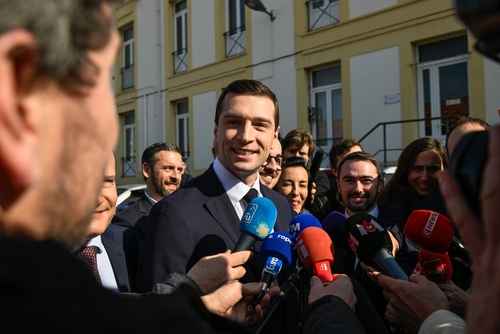
Emmanuel Macron’s call for a snap parliamentary election has cast the spotlight on Marine Le Pen’s National Rally (Rassemblement National, RN), which has made significant strides in recent elections. With Macron’s centrist Renaissance party struggling, the RN is well-positioned to gain considerable influence in the upcoming elections.
Background and Leadership
National Rally, formerly known as the National Front, was founded in 1972 by Jean-Marie Le Pen. The party has undergone significant transformations under the leadership of his daughter, Marine Le Pen, who served as its president from 2011 to 2021. In 2018, in a bid to shed its controversial past and appeal to a broader electorate, the party rebranded itself as the National Rally. Marine Le Pen’s efforts to soften the party’s image have included distancing it from accusations of racism and antisemitism.
The current leader, Jordan Bardella, succeeded Le Pen and is the first person outside the Le Pen family to lead the party in its 50-year history. Bardella, a 28-year-old rising political star, has been instrumental in the party’s recent successes, including their strong performance in the European elections.
Political Stance and Key Policies
National Rally is a party with a focus on nationalist and populist policies. Its main concerns revolve around immigration, the cost of living, and crime. Here are some of the key policies associated with the party:
Immigration and Borders
- Advocates for stricter immigration controls and securing France’s borders.
- Opposes illegal immigration and supports measures to limit migrant entry.
Nationalism and Sovereignty
- Emphasizes French national identity, sovereignty, and cultural heritage.
- Opposes further European Union integration and advocates for more autonomy for France.
Economic Protectionism
- Supports protectionist economic policies to prioritize French businesses and workers.
- Aims to limit foreign competition and promote domestic industries.
Law and Order
- Focuses on crime reduction and strengthening law enforcement.
- Supports tougher penalties for criminals and stricter enforcement of laws.
Secularism and Identity
- Defends secularism (laïcité) and opposes religious influence in public life.
- Advocates for preserving French cultural identity and traditions.
Social Welfare and Healthcare
- Aims to protect social welfare programs and improve healthcare services for French citizens.
Recent Developments and Electoral Prospects
In the 2024 European Parliament elections, National Rally secured about 32% of the vote in France, significantly outperforming President Macron’s party, which garnered around 15%. This strong showing led Macron to dissolve the National Assembly and call for snap parliamentary elections, scheduled to take place in two rounds on June 30 and July 7, 2024.
Recent polls indicate that National Rally is leading the race ahead of the upcoming parliamentary elections. Three different polls show RN securing between 33% and 35% of the vote, with the left-wing Popular Front and Macron’s Together bloc trailing behind. These polls suggest that while RN may not achieve an outright majority, it is poised to become the largest bloc in the National Assembly.
Potential Impacts and Future Scenarios
If National Rally wins a significant number of seats but falls short of an absolute majority, it may still play a pivotal role in shaping French politics. The potential for “cohabitation,” where the president and the government are from opposing political camps, could lead to a power-sharing arrangement. This scenario would see Jordan Bardella as the likely candidate for prime minister, imposing limits on Macron’s policy initiatives, particularly concerning foreign policy and economic matters.
Marine Le Pen has expressed confidence that RN will achieve an absolute majority and has hinted at significant changes in policy direction, especially regarding France’s stance on immigration and its support for Ukraine.
Conclusion
National Rally’s rise in recent elections underscores a shift in the French political landscape. With its strong nationalist and populist stance, the party has capitalized on public discontent over immigration, economic issues, and national sovereignty. The forthcoming parliamentary elections will be a critical test for the RN, potentially reshaping the balance of power in France and influencing its future direction. As the election dates approach, the party’s policies and campaign strategies will be closely scrutinized by both supporters and critics, making the outcome a crucial determinant of France’s political future.
By Pat Harrington
 THIRDWAY THINK-TANK | The Voice of the Radical Centre
Discussion
No comments yet.