471 words, 2 minutes read time.
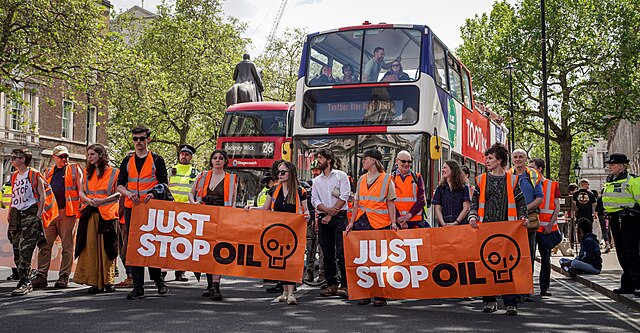
Sixteen non-violent Just Stop Oil protesters, handed harsh sentences since July, are set to receive a historic collective hearing before the Court of Appeal next year. This extraordinary development, announced Saturday, signals an opportunity to question the fairness of the punitive measures and their implications for democracy.
The mass hearing, scheduled for January 29-30 at the Royal Courts of Justice in London, will focus on four key cases involving activists from the environmental group. Central to the appeal is the argument that conscientious motivation should serve as a mitigating factor, a principle crucial to safeguarding the right to protest in a democratic society.
Among those sentenced are the “Whole Truth Five,” who organised a peaceful protest on the M25 demanding an end to new oil and gas licences. Their collective punishment—a staggering 21 years—drew criticism from the United Nations Special Rapporteur Michel Forst, who called it a “dark day” for fundamental freedoms in Britain.
The sentences also include activists who threw soup at Van Gogh’s Sunflowers (protected by glass) and those who occupied tunnels to protest fossil fuel infrastructure. These actions, disruptive but non-violent, have been met with judicial responses more severe than those for some violent crimes.
Chilling Effect on Democracy
This isn’t about whether one agrees with the views or tactics of Just Stop Oil—it’s about fairness and the implications of disproportionate punishment on democracy. Excessive sentences, like those handed down to these activists, risk creating a chilling effect, discouraging citizens from engaging in lawful protest for fear of draconian penalties.
Pat Harrington, Director of the Third Way think tank, commented:
“I hope these disproportionate sentences will be overturned on appeal. Fairness and democracy demand it. Justice should never be wielded as a tool to silence dissent, no matter how inconvenient the message.”
Broader Implications
The activists’ appeal comes amidst heightened scrutiny of how the UK legal system handles protest. Critics argue that harsh penalties align with calls from figures like Lord Walney, whose ties to arms and fossil fuel industries have raised questions about impartiality. His recommendation to outlaw groups such as Just Stop Oil has been seen as an attack on free expression and political accountability.
Lex Korte, spokesperson for the Free Political Prisoners campaign, went further, calling the sentences “corruption designed to shield the fossil fuel industry.” Korte also pointed out the inconsistency of punishing peaceful protestors more harshly than perpetrators of serious crimes, such as sexual violence.
The stakes in January’s hearing are monumental. The outcome will not only decide the fate of 16 individuals but also set a precedent for how far the state can go to suppress dissent. It’s a moment of reckoning for the British legal system and a litmus test for the strength of democracy itself.
By Pat Harrington
Picture credit
By Alisdare Hickson, CC BY-SA 2.0, https://commons.wikimedia.org/w/index.php?curid=132699645
 THIRDWAY THINK-TANK | The Voice of the Radical Centre
Discussion
No comments yet.