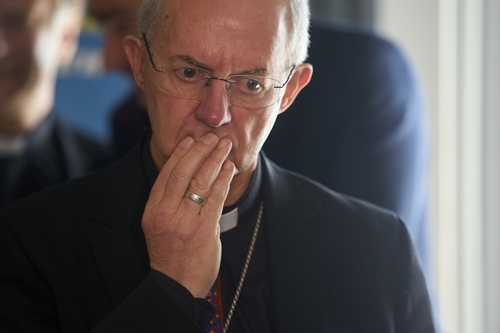
The resignation of Archbishop Justin Welby marked one of the most significant ecclesiastical scandals in recent memory. The head of the Anglican Communion, a global denomination with millions of adherents, is a position that carries immense spiritual, moral, and cultural responsibility. For such a figure to resign not only as Archbishop but also to abandon the priesthood entirely sent shockwaves through both religious and secular communities. This article delves into the series of controversies, missteps, and failures that precipitated this downfall and evaluates whether his resignations and subsequent apology suffice to restore faith in the Church’s leadership.
A Troubled Tenure
Archbishop Welby’s tenure began with high hopes. Known for his eloquent sermons and emphasis on social justice, he was initially celebrated as a unifying figure. However, cracks began to emerge as he struggled to balance the Church’s traditional doctrines with the rapidly changing societal values. Critics argue that his inability to reconcile these differences alienated both progressives and conservatives within the Church.
Allegations of Mismanagement
One of the most damning critiques of his leadership was the alleged mismanagement of Church funds. Investigative reports revealed that under his administration, significant resources were allocated to projects that failed to deliver measurable benefits. Lavish spending on personal residences and the use of Church funds for extravagant events led to widespread accusations of hypocrisy. For an institution built on principles of humility and service, these allegations severely undermined his credibility.
Handling of Abuse Scandals
Perhaps the most damaging aspect of Archbishop Welby’s tenure was his handling of abuse scandals within the Church. While he publicly condemned abuse and promised reforms, many victims and advocacy groups accused him of protecting the institution’s reputation over seeking justice. High-profile cases involved clergy members who were accused of sexually abusing minors and vulnerable adults. The most notorious case was that of John Smyth, a prominent Anglican figure and lawyer accused of severely abusing young boys at Christian camps he ran in the 1970s and 1980s. Smyth’s abusive practices, including beatings described as “sadistic,” were reportedly known to Church leaders, including Welby, who had worked with Smyth at these camps.
Welby maintained that he was unaware of the full extent of Smyth’s actions during his time at the camps. However, critics have pointed to internal Church documents and survivor testimonies suggesting otherwise. Survivors accused Church officials, including Welby, of failing to act decisively to bring Smyth to justice, instead prioritizing institutional reputation. The lack of transparency and justice for victims compounded the outrage and highlighted systemic failures within the Church’s hierarchy.
Theological Controversies
The Archbishop’s attempts to modernize Church doctrine were met with fierce resistance. His progressive stance on issues such as LGBTQ+ inclusion and gender equality in Church leadership alienated conservative factions. Meanwhile, his reluctance to fully embrace these reforms frustrated progressive advocates who saw him as indecisive. This inability to navigate theological divisions left the Church more fragmented than ever.
The Resignation
Faced with mounting pressure from both within and outside the Church, Archbishop Welby announced his resignation. Initially framed as a decision to “pursue a period of reflection,” subsequent revelations painted a different picture. Leaked documents and insider accounts suggested that senior Church officials had urged him to step down to mitigate further reputational damage.
Welby’s subsequent resignation as a priest was even more shocking. In his public statement, he admitted to “personal failings” and expressed remorse for his role in the scandals that had engulfed the Church. While some viewed this as an act of humility, others interpreted it as an attempt to evade further scrutiny.
Is an Apology Enough?
The Archbishop’s apology was extensive, acknowledging his missteps and the pain caused by his actions and inactions. However, critics argue that words alone are insufficient. The systemic issues that allowed these failures to occur remain largely unaddressed. Moreover, his resignation has left the Church in a state of leadership vacuum, with no clear path forward.
Rebuilding Trust
For many, Archbishop Welby’s downfall is emblematic of deeper issues within the Church. Calls for comprehensive reforms have grown louder, with demands for greater transparency, accountability, and inclusivity. While his resignation may provide an opportunity for renewal, it also raises questions about the Church’s ability to recover from such a high-profile scandal.
Conclusion
The fall of Archbishop Justin Welby is a cautionary tale of the immense responsibility that comes with spiritual leadership. His tenure, marked by mismanagement, scandal, and division, serves as a reminder of the need for integrity and accountability at all levels of the Church. While his resignation and apology may signal a desire for atonement, they are unlikely to fully repair the damage done. Ultimately, the Church’s ability to move forward will depend not just on individual acts of contrition but on a collective commitment to meaningful reform.
The question remains: Are Archbishop Welby’s resignations and apology enough to restore faith, or are they merely the first steps in a much longer journey of redemption for the Church? Furthermore, this scandal prompts a broader question: Should the Church of England continue to hold its privileged position as an established Church, or does this moment demand a serious reconsideration of its role in a modern, secular state?
 THIRDWAY THINK-TANK | The Voice of the Radical Centre
Discussion
No comments yet.