1,000 words, 5 minutes read time.
Reform UK scored a string of shocks in May 2025: it won 10 councils, two mayoralties, and the Runcorn & Helsby by-election – the latter by just six votes. Farage hailed the night as “huge” for Reform, reflecting deep discontent with both Labour and the Tories. These results were not isolated blips, but rather symptoms of broader voter realignment across England, especially in economically neglected areas.
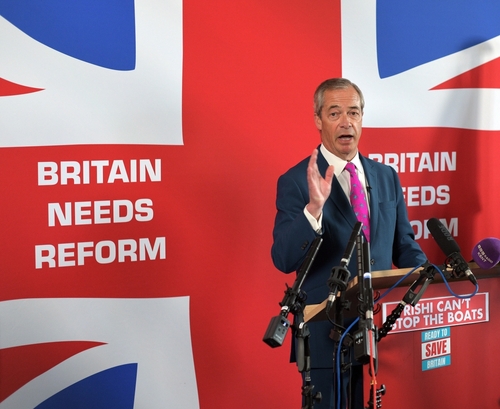
The intensity of the anti-Farage and anti-Reform UK campaign was striking. Stand Up To Racism (SUTR) ran a “Stop Reform UK” campaign, boasting over 100,000 leaflets distributed nationwide and regular weekend stalls in marginal areas. In Runcorn alone, 50 activists campaigned every weekend. Protesters heckled Farage at rallies, labeling Reform a racist party. Online and offline, activists framed it as a battle against racism and hate.
Leading trade unionists joined the charge. On 29 April 2025, a joint statement signed by NEU general secretary Daniel Kebede, PCS’s Fran Heathcote, ASLEF’s Mick Whelan, and BFAWU’s Sarah Woolley urged voters to “stop Reform UK.” The statement focused on condemning Farage’s rhetoric as dangerous and scapegoating. It ended with the call to “adopt a human rights-based refugee and migration policy that implements safe passage for asylum-seekers and compensation for those impacted by the Windrush scandal.” That read as dismissive of working-class concerns about asylum-seekers and allocation of increasingly scarce resources.
But despite these efforts, Reform surged. Why? Part of the answer lies in understanding the limited effect of branding Reform UK as racist. It’s not that people don’t know Reform’s stance on immigration. In fact, Reform UK has been brazenly open about it. In Doncaster, Reform’s mayoral candidate Andrea Jenkyns said: “We should stop putting illegal immigrants in hotels. It should be in tents, then send them back to France. We need to make it uncomfortable.” These aren’t dog-whistles. They’re foghorns.
To claim anti-racist campaigners are exposing something hidden is to misunderstand the dynamic. Reform voters aren’t unaware of the party’s stance. Many vote despite or even because of it. That reality must be faced honestly. Labelling Reform racist won’t deter those who already think immigration is out of control.
Polls show this clearly. A 2025 Ipsos poll found 67% of Britons believe immigration levels are too high, and 68% said the same about asylum-seekers. A 2023 YouGov survey found that only 14% want more asylum-seekers; 37% want fewer. However, other surveys also show the majority of Britons think immigration benefits the economy and culture. Public attitudes are contradictory: people may support immigration in theory, yet resent its perceived effects locally.
What this means is that calling voters racist won’t win them back. As John McDonnell recently pointed out, many feel Labour has abandoned them. They hear the moral condemnation and switch off. And perhaps it’s time some on the Left spent less time retweeting each other and more time in Wetherspoons listening to working-class concerns firsthand.
Even many within Labour now acknowledge that the party leadership isn’t listening. The Labour hold of some mayoralties has provided little comfort. Ros Jones, the newly re-elected mayor of Doncaster, was quick to distance herself from Starmer. She declared, “We have the lowest council tax in Yorkshire and are well-run financially, national government needs to look and see what people are saying. They are saying the same as I am. I wrote to Starmer as soon as the winter fuel allowance cut was mooted and said it was wrong. I stepped in immediately and used our council’s household support fund. The results here tonight demonstrate that they need to be listening to the man, woman and business on the street and deliver for the people with the people.”
To defeat Reform UK, anyone who cares about working people must pivot away from outraged and preachy anti-racism and towards a materialist critique. Reform UK is no friend of the working class. Its 2024 manifesto proposed nearly £90 billion in annual tax cuts and £150 billion in spending cuts. The IFS notes that fulfilling these pledges would require severe reductions to public services.
Reform wants to slash corporation tax from 25% to 15%. Meanwhile, it proposes vague promises to fix the NHS without credible funding. If implemented, this would mean fewer nurses, fewer teachers, and threadbare services.
Andrea Jenkyns, now a leading Reform figure, has consistently voted in Parliament against equality laws and for tax breaks to the wealthy. This is not a party of the people. It’s a party of bosses, rebranded in populist clothing.
Reform also offers nothing to workers in terms of rights. It is silent on raising the minimum wage, strengthening unions, or fighting precarious work. Labour has at least nodded to investing in green jobs and local authority power. Reform offers only more deregulation.
This is happening in a country where household incomes have stagnated, foodbank use has reached record highs, and workers face rising insecurity. Farage exploits this despair by offering immigrants as a scapegoat.
But there is no mystery to this. Even the NEU motion admits Reform feeds on poverty and alienation. The mistake is pretending that shouting “racist” louder will shift the mood. Reform voters aren’t fooled by Farage. They’re furious at a broken system and grabbing whatever stick they can to beat it.
So yes, call out racism and put forward alternative sensible strategies on migration . But pair it with a class-based strategy. Show that Farage and Reform will cut your school budget, charge you for your GP, and reduce your pension. Expose their love for the ultra-rich. Tell people: Reform UK wants you angry, but not empowered or better off.
And maybe start that conversation in the pub and be prepared for a robust debate!
By Patrick Harrington
 THIRDWAY THINK-TANK | The Voice of the Radical Centre
Discussion
No comments yet.