2,927 words, 15 minutes read time.
Mutual societies – organizations owned by their members rather than outside shareholders – are a thriving part of the UK’s economy and community life. As a supporter of mutual ownership, I’m proud to note that the UK is home to thousands of mutual societies across all sectors, from finance and housing to agriculture and retail. In fact, there are roughly 9,000 mutual organizations nationwide, encompassing everything from local credit unions to major national businesses. Each one operates on the principle of shared ownership and democratic control: whether the members are customers, employees, or producers, they all have a stake and a say in how the enterprise is run. This member-centric model isn’t just a quaint ideal – it’s delivering real benefits to the UK economy and society every day.
Mutual Societies in Finance, Housing, Agriculture, and Retail
A local branch of Nationwide Building Society in Worcester. Building societies like Nationwide are key mutual institutions in UK finance, owned by their savers and borrowers.
Mutual enterprises span a remarkable variety of industries in Britain. Below are some of the most prominent mutual societies in key sectors, each illustrating the strength and diversity of the mutual model:
- Nationwide Building Society (Finance): The largest building society in the world and a leading UK financial institution, Nationwide is owned by over 16 million members. Instead of traditional bank shareholders, its customers who save and borrow are the members who collectively own the organization. Nationwide and dozens of other building societies (such as Yorkshire, Coventry, and Skipton Building Societies) provide banking services, mortgages, and savings accounts with a mission to put members’ needs first. These institutions together serve around 25 million people in the UK, showing how widespread financial mutuals are – almost everyone knows someone with a building society account!
- Royal London (Finance): Royal London is the UK’s largest mutual life insurance and pensions company. Founded in the 19th century, it remains entirely owned by its policyholders. Millions of customers hold policies or pensions with Royal London, and because it’s a mutual, any profits are reinvested for members’ benefit or shared with them (for example, through “ProfitShare” bonuses added to their policies). Royal London is one of several major insurance providers that operate as mutuals – others include the likes of LV= (Liverpool Victoria), a member-owned insurer established in 1843, and NFU Mutual, originally founded by farmers to offer affordable insurance in rural communities. All of these companies prioritize fair treatment, long-term security, and member value as core parts of their mission.
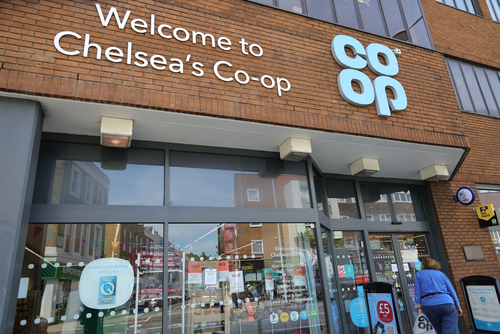
- The Co-operative Group (Retail): Often known simply as “the Co-op,” this is one of Britain’s best-known mutual businesses. The Co-operative Group is a consumers’ co-operative owned by millions of customer-members across the country. It operates supermarkets (Co-op Food stores in towns and villages nationwide), as well as services like funeral care, pharmacies, insurance, and more. Every member of the Co-op has a vote in elections for the board and a share in the profits through the Co-op’s dividend scheme. For example, when you shop at a Co-op store, a portion of what you spend goes back into your personal member reward and another portion is donated to local community causes – a tangible demonstration of mutual values at work. The Co-op’s history stretches back to 1844 (the days of the Rochdale Pioneers), and today it remains a pillar of many communities, proving that democratic retail can succeed on a large scale.
- John Lewis Partnership (Retail): The John Lewis Partnership, which includes John Lewis department stores and Waitrose supermarkets, is employee-owned – making it a shining example of mutual principles in the retail sector. In this partnership model, over 75,000 permanent staff are “Partners” who collectively own the business. There are no external shareholders; the employees themselves share in profits and have a voice in company decisions. This structure famously led to an annual bonus (a share of profits) distributed to all staff in successful years, fostering a sense of shared purpose. The culture at John Lewis and Waitrose is often cited as being exceptionally customer-focused and collegial, precisely because employees feel invested in the company’s success. As the largest employee-owned business in the UK, the John Lewis Partnership shows how giving workers ownership can drive both excellent service and a strong, values-driven brand.

- Rochdale Boroughwide Housing (Housing): Mutuality isn’t only found in business – it’s also making a difference in housing. Rochdale Boroughwide Housing (RBH) became the UK’s first tenant-and-employee owned housing society in 2013. This innovative mutual housing association in Greater Manchester is co-owned by its renters and its staff, who each can become members. RBH manages around 13,000 homes, and the mutual structure means tenants have a direct stake in how their housing is run – a powerful example of community empowerment. Members help set priorities and can vote on important decisions, ensuring that providing safe, affordable homes (and not just financial returns) stays the number one goal. The success of RBH has inspired other community-led and co-operative housing initiatives around the country, from smaller housing co-ops to tenant management organizations. It demonstrates that even in the vital area of housing, mutual ownership can put people first and strengthen communities.
- Arla Foods (Agriculture): Agriculture in the UK benefits greatly from cooperatives and mutuals that help farmers band together. One prominent example is Arla Foods, a major dairy co-operative that many British dairy farmers are a part of. Arla is collectively owned by thousands of farmers across the UK and several European countries. By uniting as a cooperative, these farmers can jointly process and market their milk, achieve economies of scale, and get a fair price for their products. Arla’s farmer-members share in the profits and decision-making, which helps to sustain family farms and rural livelihoods. Beyond dairy, the UK has numerous other agricultural mutuals: from grain marketing co-ops and machinery rings that allow farmers to share equipment, to the National Farmers Union Mutual (NFU Mutual) insurance mentioned earlier, which was started to serve farmers’ needs. All of these illustrate mutual ethos in agriculture – cooperation helps individual farmers thrive by working together, strengthening the farming sector as a whole.
These examples are just a snapshot of the UK’s mutual landscape. From hundreds of local credit unions offering community-based savings and loans, to specialist friendly societies providing health coverage and social benefits, mutual societies touch almost every aspect of economic life. Importantly, they are not fringe players: mutual and co-operative businesses collectively contribute tens of billions of pounds to the UK economy and employ hundreds of thousands of people. And with well over a quarter of the population holding membership in one or more mutual organizations, this model of ownership is deeply ingrained in British life. Now let’s explore why this form of business is so beneficial and why it continues to be so important.
How Mutual Ownership Benefits the UK Economy
Mutual societies play a valuable role in the economy, bringing unique advantages thanks to their member-first structure. Because they are not beholden to external shareholders demanding short-term profits, mutual businesses can take a longer-term and service-oriented view. This often translates into greater stability and resilience. For example, Britain’s building societies and credit unions are known for prudent financial management – a factor that helped many of them steer safely through economic downturns and financial crises. Their focus is on safeguarding members’ money and serving member interests, which tends to encourage sensible growth over risky speculation. In turn, that stability protects jobs and local economies during hard times.
Another economic benefit of mutuals is the reinvestment of profits. When a mutual does well financially, the surplus doesn’t vanish into distant investors’ pockets; instead, it is typically reinvested into the business or returned to the members. This might mean better interest rates for savers at a building society, lower insurance premiums or bonus distributions for policyholders of a mutual insurer, or expanded services from a co-op. For instance, in 2023 Nationwide Building Society chose to share some of its profits directly with members through a £100 “Fairer Share” bonus to eligible customers – effectively a dividend rewarding the people who bank with them. This kind of profit-sharing boosts members’ finances and spending power, which is healthy for the broader economy as well.
Mutual enterprises also promote competition and diversity in markets, which benefits consumers and the economy. In sectors like banking, insurance, retail food, and energy, having member-owned firms in the mix means there are organizations driven by customer value and service rather than just maximizing profit. This can push the whole industry toward better rates and practices. Building societies, for example, often offer competitive mortgage and savings rates, nudging the big shareholder-owned banks to up their game to keep customers. Likewise, the Cooperative Group’s commitment to ethical sourcing (Fairtrade products, honest labeling, etc.) has influenced other supermarkets over time. By existing as alternatives, mutuals give consumers more choice – you can opt to get your mortgage from a member-owned building society or buy groceries at a co-op, aligning your spending with your values.
There’s also a resilience and entrepreneurship angle: mutual and co-operative businesses have shown a knack for weathering storms and lasting for the long haul. Surveys have found that co-operative startups are more likely to survive their first five years than other new businesses. This makes sense – members of a co-op or mutual tend to stick with it and support it, even during tough periods, because they have a personal stake in its success. Employees in an employee-owned company are more motivated to innovate and solve problems, knowing the future of their company is in their hands. Such resilience means fewer business failures and more sustained economic activity. It also means communities are less likely to suffer sudden losses of essential services (like a bank branch closing or a local shop shutting down) when those services are provided by mutuals committed to serving their members.
Finally, let’s not forget job creation and local investment. Mutuals collectively employ a substantial workforce in the UK – from the thousands of staff at Nationwide, John Lewis, or the Co-op, to the many small co-ops and credit unions with just a few employees each. These jobs often come with a greater sense of security and satisfaction, because working for a mutual can be quite different than working for a profit-driven firm. In a mutual, employees know that the company’s success is shared, and that can mean more stable employment and even profit-sharing in some cases. Moreover, mutual businesses tend to be rooted in their communities and more accountable to local needs. They are likely to invest in community programs, new branches or facilities in underserved areas, and training for staff, rather than simply extracting profits from a region. All of this contributes to a healthier, more inclusive economy.
The Community and Cultural Value of Mutual Ownership
Beyond pounds and pence, mutual societies hold a special place in UK society and culture. They carry forward a rich legacy of self-help, solidarity, and community responsibility that has been part of British life for generations. In fact, the modern mutual and co-operative movement traces its origins to the Industrial Revolution era, when ordinary people formed friendly societies, building societies, and co-ops to support each other in hard times. Those cultural roots are still evident today. When you walk into a Co-op store or attend a building society’s annual general meeting, you’re participating in a tradition of mutual aid that goes back over 175 years to the days of the Rochdale Pioneers (who opened their famous co-operative shop in 1844). This heritage gives mutual organizations a sense of purpose beyond profit – they were created to improve ordinary people’s lives, and that ethos continues to inspire their activities.
One of the greatest social strengths of mutual ownership is how it builds community and trust. In a world where many people feel disconnected from big corporations or institutions, mutuals offer a refreshing approach: one member, one vote; we’re all in this together. When you are a member of a mutual society, you’re not just a customer or an employee – you’re a co-owner. This status can foster a real sense of belonging and loyalty. Members are often encouraged to engage with the organization’s direction, whether by voting in elections, attending meetings, or joining member forums to provide input. For example, members of The Co-operative Group can vote for representatives at yearly meetings and have a say on motions that guide the business. Building society members regularly vote on board elections and major decisions, and many societies hold member roadshows or Q&A sessions. These practices give individuals a voice and make them feel heard – something quite valuable in modern society. Even if not every member actively participates, just knowing that you have the right to can increase trust and goodwill. It turns the relationship between a business and its patrons into more of a partnership.
Mutual societies also tend to reinforce ethical values and social responsibility, which benefits communities culturally. Because they exist to serve members and not outside investors, mutuals can align their goals with what their member community cares about. This often includes a strong commitment to fairness, equality, and improving local quality of life. For instance, many credit unions focus on financial inclusion – they will lend small amounts to people the big banks ignore, helping to avoid predatory payday loans and fostering economic justice. The Co-op and other retail co-ops have been pioneers in fair trade products, sustainability, and cutting down food waste, reflecting members’ ethical concerns. Several building societies and mutual insurers support charitable foundations, sponsoring local community projects, education, and sports. And in the case of mutual housing like RBH, the very model is tackling social issues by giving tenants control to shape better living conditions and neighborhood services. All of these actions strengthen the social fabric: they encourage people to look out for one another and to run businesses with humanity in mind.
Culturally, mutual ownership empowers people in ways that are hard to measure but deeply felt. Consider a village that might lose its last pub or shop – in a number of cases, residents have come together to form a cooperative to buy and run the pub or the local store themselves. This has happened with village shops, pubs, even community-run libraries across the UK. When they succeed, it not only preserves a vital hub for social life, but it also gives the community a tremendous sense of pride and agency. The message is “we did this together, for ourselves.” That spirit is the essence of mutuality. It shows that business and community need not be at odds – they can be one and the same. People of all walks of life can cooperate to meet their needs, whether it’s affordable finance, good food, housing, or insurance, and in doing so build stronger bonds with each other.
It’s also worth noting the loyalty and satisfaction that mutual organizations often enjoy. Take customer surveys and trust ratings: time and again, building societies and mutual insurers rank highly for customer satisfaction and trustworthiness. Members frequently feel a greater loyalty to their mutual providers, precisely because they sense that those institutions are on their side. This creates a positive feedback loop – the more trust and goodwill a company builds, the more its members support it, and the better it can do to help those members in return. In employee-owned firms like John Lewis, employees (partners) famously have a reputation for excellent customer service and going the extra mile, which stems from genuine engagement in their work and pride in their company. These cultural qualities – trust, pride, loyalty, shared identity – are hard to quantify but hugely important. They contribute to social capital, that invisible glue that helps communities thrive.
A Positive Force for People and Communities
In summary, mutual societies in the UK are far more than just an economic niche or a historical curiosity – they are a dynamic, positive force benefiting millions of people. Whether it’s a family getting their first home mortgage from a building society, a community saving its local shop by turning it into a co-op, or an employee finding a fulfilling career at an employee-owned company, the impacts of mutual ownership are profound. These organizations show that business success can go hand-in-hand with democratic governance, fairness, and community well-being. They add diversity and resilience to our economy, and they embed important values in our marketplaces – values like trust, mutual support, and long-term thinking.
Crucially, mutuals also remind us that economic activity is ultimately about people. By giving ordinary individuals a stake in enterprises, mutual societies ensure that people – whether they are called customers, members, employees, or residents – are at the heart of every decision. This has a humanizing effect on business and finance. In a time when many feel that big companies or banks don’t listen to them, mutuals offer a model that does listen and invites participation. It’s a model where success is shared, not concentrated.
The UK’s mutual and co-operative sector, spread across finance, housing, agriculture, retail and more, clearly demonstrates the benefits of this approach. It contributes to economic prosperity in a way that is inclusive and sustainable, and it enriches society by fostering empowerment and community spirit. As a supporter of mutual ownership, I believe these enterprises are something to celebrate and nurture. They prove that when we pool our resources and work together as equals, we can create businesses that truly serve the common good – strengthening our economy and our communities at the same time.
By Pat Harrington
Discussion
No comments yet.