1,750 words, 9 minutes read time.
There was relief amongst the UK political establishment when a new deal with the EU was struck to eliminate routine post-Brexit food inspections. Trade had been struggling – food exports to Europe plunged by 21% and imports fell 7% since Brexit – so the prospect of smoother commerce was celebrated as a much-needed boost. But behind the celebratory headlines, a stark warning is emerging from the frontline at Britain’s ports: the relaxation of border checks comes with serious risks. The UK’s inspection regime for food and animal products is being exposed as alarmingly porous, under-resourced, and systemically unfit for purpose. Nowhere is this more evident than at Dover, the country’s busiest port, where biosecurity failings are sounding alarm bells among experts and officials. This article explores the potential dangers of the UK’s weakened import controls – from illegal meat floods to looming animal disease disasters – and critiques a government approach long on complacent rhetoric but short on effective action.
Post-Brexit Promises vs. Border Reality
In theory, Brexit was supposed to enable the UK to “take back control” of its borders and implement world-class biosecurity. In practice, the post-Brexit transition threw the UK’s food import safeguards into disarray. After leaving the EU, Britain could no longer use the EU’s TRACES system (Trade Control and Expert System) for tracking animal product imports, and launched its own Import of Products, Animals, Food and Feed System (IPAFFS). However, early on this new system showed worrying flaws. For example, in January 2025 when a foot-and-mouth disease (FMD) outbreak was detected in Germany, the UK swiftly announced a ban on meat and dairy from that country. Yet, Helen Buckingham – a veteran Environmental Health consultant – told MPs that after the ban took effect on 11 January, IPAFFS “took another seven days to adjust”, during which time banned German animal products were still being waved through unchecked. Lucy Manzano, head of the Dover Port Health Authority (DPHA), confirmed that for at least six days shipments from Germany that should have been stopped were instead automatically “auto-cleared” by a contingency feature, allowing them to enter the UK without inspection. This happened because of a “timed-out” auto-release function – introduced under the government’s new Border Target Operating Model – that green-lights a load if no inspection is done within a couple of hours of its arrival. In this case, the digital system simply hadn’t caught up with the emergency import ban. Prohibited meat slipped through Britain’s defenses due to a sluggish IT update and a gaping procedural hole.
Defra (the Department for Environment, Food & Rural Affairs) later insisted it was “entirely incorrect” to say it took a week to stop German imports, claiming that “robust biosecurity controls” were implemented immediately. But frontline officials saw a different reality. Manzano noted that loads of German product continued to “auto-clear” via a loophole, and that those on the ground received scant communication or guidance from central government on the new policy. This episode highlighted a broader truth: despite ministerial reassurances, Britain’s post-Brexit import control systems were not fully ready for prime time. A senior MP, EFRA Committee Chair Alistair Carmichael, remarked that such vulnerabilities in border controls “expose the UK to serious risks, such as African swine fever, which would have catastrophic consequences for the agriculture sector”. The government’s vaunted “Border Target Operating Model” (BTOM) – intended to streamline trade by moving checks away from ports and trusting digital processes – was already showing cracks.
Dover: A Weak Link in the Chain
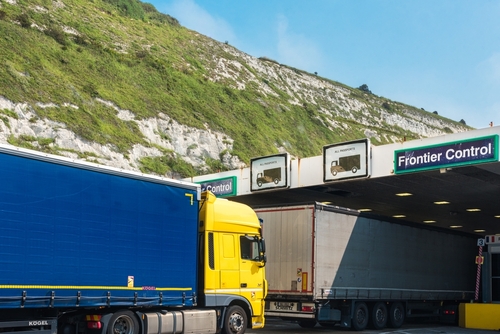
Dover is by far the UK’s largest gateway for food imports from the EU, handling thousands of lorries a day. If biosecurity fails at Dover, the whole country is at risk. Yet by design, full checks on commercial food shipments don’t even take place at the port. Under BTOM, trucks arriving at Dover drive straight off the ferry and 22 miles inland to a government-run Border Control Post (BCP) in Sevington, near Ashford, for any inspections. In theory this “inland checking” was meant to avoid port congestion. In practice it has created a dangerous blind spot: there is a long window where potentially illegal or high-risk loads enter the UK and travel freely on the road, unsupervised, before reaching the inspection site. Manzano has sharply criticised Defra for failing to explain “how food would be controlled at the point it arrives, or more importantly, between the point it arrives and the inspection facility 22 miles across”. According to her, “robust controls” at the border, which ministers keep talking about, simply “don’t exist”.
Even when shipments do reach Sevington, the system is lenient. Under BTOM’s risk-based approach, only a small fraction of consignments are flagged for physical inspection – and even those can be skipped if delays occur. Manzano has described a litany of systemic failings in the current setup, for example:
- Auto-timed paperwork: Import documentation in the IT system is automatically marked “timed-out” about two hours after a truck’s scheduled arrival, which often means if a ferry is delayed or processing is slow, the system simply cancels the inspection flag and the shipment is free to go.
- Lack of physical checks: There are virtually no “live” physical checks on goods at Dover or en route unless a trader voluntarily diverts to Sevington for inspection – a voluntary system that is about to disappear entirely. In other words, unless importers go out of their way to present their goods for inspection, most shipments are never looked at by any inspector.
- No local spot checks: Astonishingly, Dover’s port health authority is not funded or authorised to conduct proactive spot checks on vehicles at the port. Unlike some countries where border guards can pull aside any suspicious truck, Dover’s team can only inspect what the central system refers to them. They have pleaded for resources to do on-the-ground checks, but so far have been denied.
Thanks to these gaps, Manzano estimates that around 80% of illicit or high-risk food products coming through Dover are escaping unfettered into the UK, without interception. At the Channel Tunnel entry point in Coquelles (Calais) – where there is zero physical inspection presence – close to 100% of illegal goods sail through untouched. This is especially worrying because, by Manzano’s account, over 90% of all illegal meat imports entering Britain arrive via these two “Short Straits” routes (Dover ferry port and the Eurotunnel). In short, the country’s biggest entry corridor for food is effectively a wide-open door. It is a systemic failure in the UK’s inspection infrastructure – one that savvy smugglers have not hesitated to exploit.
Illegal Meat Flooding In
Evidence is mounting that Britain is facing an influx of illegal meat and animal products on an unprecedented scale. Since post-Brexit controls on EU goods were relaxed, seizures of illegal meat at Dover have skyrocketed. DPHA teams operating with limited resources have still managed to remove over 230 tonnes of illicit animal products since September 2022 – and the trend is sharply upward. In the first four months of 2025 alone, 70 tonnes of illegal meat and dairy were seized at Dover, almost triple the 24 tonnes in the same period the year before. (For comparison, in early 2023 only 13 tonnes were intercepted in that window, highlighting how rapidly the problem is growing.) On one single day in December, Dover inspectors confiscated 6 tonnes of unlawful pork products in just 14 hours, a glimpse of the sheer volume slipping through. And these figures represent just the tip of the iceberg – remember, as noted, Dover is only able to check a small fraction of vehicles under current constraints, so the true scale of illegal imports is certainly far higher.
Where is this contraband meat coming from, and why the surge now? Much appears to be cheap pork and chicken from Eastern Europe – notably countries like Romania and Moldova, where African swine fever (ASF) is rampant and their exports of pork are officially banned due to disease risk. Organized criminal networks have seized on the UK’s lax regime as an opportunity. Manzano warned Parliament that criminals are actively “targeting the UK with pork products from places like Romania where ASF is rife… suggesting the UK is seen as a soft touch” because of its weak controls. In other words, smugglers know that Britain’s post-Brexit border inspections are underpowered and easily evaded, so they funnel in loads of unregulated meat for profit. Some of this meat is likely processed or repackaged and then distributed through wholesalers, black markets, or unscrupulous retailers.
The result? Illegal meat has now made its way onto most high streets in the UK, by the frank admission of Dover’s port health chief. “This meat is appearing in shops on high streets and in markets,” Manzano told MPs – meaning consumers could be buying it unknowingly. “You may well be going out for dinner in normal-looking establishments and be consuming meat that has not been correctly processed,” she cautioned. Put plainly, uninspected and potentially unsafe meat has entered the everyday food supply chain. It could be in your local butcher’s sausages, the kebab from the takeaway, or the special offer at a neighborhood grocery – without anyone realising it bypassed all health and safety checks. This isn’t just an abstract policy failure; it’s a direct threat to public health and consumer confidence on the ground.
Government Complacency and Underfunding
One would think that confronted with such alarming evidence, the UK government would rush to reinforce its border defenses. Instead, the official response has been marked by complacency, penny-pinching, and even denial. Defra ministers continue to insist publicly that “we are unequivocal that importing illegal meat products is unacceptable” and that “suspected products are subject to thorough checks at the border” – claims that border officials flatly contradict. The government’s priority, clearly, has been to keep trade flowing and avoid any extra friction, even at the expense of food safety vigilance. Every planned measure to toughen import controls since Brexit has been delayed, diluted, or abandoned. Full sanitary checks on EU imports were postponed multiple times through 2023-24 over fears of disrupting supply chains and raising food prices. The state-of-the-art BCP infrastructure that ports like Portsmouth invested millions in building now sits largely idle – a “white elephant” that may even be demolished – because the latest UK–EU deal scrapped the very checks it was designed for. At Dover, a brand-new inspection facility was initially planned but never completed once it became clear the government was backtracking on requiring routine checks. The grand promises of “taking back control” have, in practice, translated into a border inspection regime starved of resources and politically deprioritized.
By Pat Harrington
 THIRDWAY THINK-TANK | The Voice of the Radical Centre
Discussion
No comments yet.