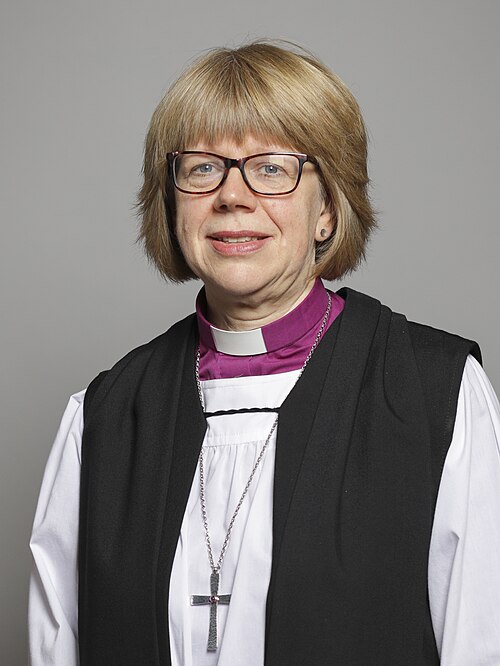
The Church of England stands at a moment of profound vulnerability. Years of safeguarding failures, internal division, and dwindling public trust have left the institution struggling to articulate its purpose, let alone its future. Into this landscape steps Dame Sarah Mullally, the incoming Archbishop of Canterbury, whose appointment has been greeted with a mixture of hope, scrutiny, and unease. Her leadership begins not with a blank slate but with a ledger already marked by unresolved controversies, institutional fatigue, and a public increasingly sceptical of episcopal assurances.
To understand the scale of the task before her, one must first acknowledge the depth of the Church’s safeguarding crisis. This is not a single scandal but a long, painful accumulation of failures — procedural, pastoral, and cultural. The outgoing Archbishop faced intense criticism following an independent review into his handling of a case involving a known abuser, a report that highlighted significant shortcomings in the Church’s response to allegations and reinforced the perception that senior leadership has struggled to protect the vulnerable. These concerns have not faded with his departure; they have become the backdrop against which Mullally’s every move will be judged.
No case illustrates this more starkly than the death of the Reverend Alan Griffin. Griffin, a London rector, died by suicide in 2020 after being suspended from ministry following allegations he denied. The coroner later stated that the Church’s handling of the process contributed to the pressures he experienced, though the Church has disputed aspects of that interpretation. What is beyond dispute is that the case unfolded within the Diocese of London during Mullally’s tenure as Bishop of London, placing it squarely within her sphere of leadership responsibility.
The circumstances surrounding Griffin’s final months have become emblematic of wider concerns about transparency, due process, and pastoral care. Channel 4 News reporting revealed that Griffin’s name appeared in a confidential internal dossier — the so‑called “Two Cities” report — which contained a mixture of safeguarding concerns, criminal convictions, and unverified material. The Diocese of London confirmed that Mullally received the dossier but stated that she did not read it, believing that some of its contents were gossip and should instead be assessed by safeguarding professionals and the diocesan registrar. Some clergy expressed scepticism about this, arguing that either reading or not reading the report could be seen as a failure of episcopal responsibility. These are opinions, not findings, but they speak to a deeper truth: the Church’s internal processes have lost the benefit of the doubt.
Mullally has apologised to Griffin’s family and friends, both in 2022 and more recently, and she commissioned an independent review into the diocese’s handling of safeguarding concerns following the coroner’s findings. Yet the case continues to cast a long shadow. It is not simply a tragedy; it is a symbol of systemic fragility — a reminder that safeguarding failures can harm not only survivors but also clergy caught in opaque and protracted processes.
Alongside the Griffin case, Mullally enters office with another safeguarding controversy involving a survivor known publicly as “N”. The allegation is that she mishandled a safeguarding matter while serving as Bishop of London. These are allegations, not findings, and Mullally has not been found to have committed misconduct. A complaint made in 2020 was not progressed due to what the Church later described as administrative errors and misunderstandings about the complainant’s wishes. Mullally has acknowledged that the complaint was not handled correctly at the time. The Archbishop of York reviewed the matter and concluded that no further action should be taken, though survivor groups have questioned the independence of this process, arguing that bishops should not be responsible for assessing complaints about one another.
This is the trust deficit Mullally inherits: a Church whose safeguarding structures are widely viewed as insufficiently independent, and whose internal reviews — however procedurally correct — struggle to command public confidence. Even when no misconduct is found, the perception of self‑policing lingers.
Beyond safeguarding, the Church faces structural pressures that would challenge even the most seasoned leader. Attendance continues to decline, particularly among younger generations. Doctrinal divisions — especially around sexuality and liturgy — have hardened into entrenched camps. Clergy morale is low, with burnout rising and resources stretched thin. Financial pressures, especially in rural dioceses, threaten the viability of long‑established parishes. These issues are not isolated; they feed into one another. Safeguarding failures erode trust; declining trust accelerates declining attendance; declining attendance intensifies financial strain.
The cultural perception problem is equally acute. The Church’s public image has become dominated by safeguarding failures, internal conflict, and high‑profile tragedies such as the Griffin case. Even where the Church is doing valuable community work, it struggles to shift the narrative. Mullally’s appointment — as the first woman to hold the office — carries symbolic significance, but symbolism alone cannot repair institutional credibility.
And so the question becomes: can she turn things around? Mullally brings considerable strengths to the role. Her administrative experience from the NHS gives her a grounding in complex systems, risk management, and organisational reform. She has a reputation for calm, structured leadership and a willingness to acknowledge institutional shortcomings. She also represents a symbolic break from the previous era — a chance to reset expectations.
But she also carries liabilities. She begins her tenure with two safeguarding controversies still prominent in public discourse. She leads a Church whose internal processes are widely viewed as insufficiently independent. She must rebuild trust with survivors who feel let down by the institution, while also addressing concerns raised by cases like that of Alan Griffin, which continue to resonate deeply. And she must do all this while navigating doctrinal fractures and stabilising attendance and morale.
Her success will depend on whether she can deliver safeguarding reform that is genuinely independent, transparent, and survivor‑centred — while also ensuring that clergy subject to allegations are treated with fairness and pastoral care. Without that, no amount of administrative skill or symbolic change will shift the Church’s trajectory.
This is not a moment for soft-focus ecclesiastical optimism. It is a moment for structural honesty. Mullally’s leadership will be judged not by ceremonial visibility but by whether she can rebuild trust in an institution that has spent years eroding it. Trust, once lost, is the hardest thing to restore — but it is also the only foundation on which the Church’s future can rest.
By Pat Harrington
Picture credit: The Right Reverend and Right Honourable Dame Sarah Mullally By Roger Harris – https://members-api.parliament.uk/api/Members/4696/Portrait?cropType=FullSizeGallery: https://members.parliament.uk/member/4696/portrait, CC BY 3.0, https://commons.wikimedia.org/w/index.php?curid=176071304
 THIRDWAY THINK-TANK | The Voice of the Radical Centre
Discussion
No comments yet.