There is a particular kind of mission creep that doesn’t announce itself with fanfare. It arrives dressed as responsibility, framed as inevitability, wrapped in the language of “support,” “security,” and “peacekeeping.” Britain’s growing involvement in the Ukraine–Russia war is exactly that kind of drift: incremental, quiet, and dangerously under‑examined.
Two developments in particular demand scrutiny: the proposal that the UK contribute troops to a future “peacekeeping” force in Ukraine, and the launch of Project Nightfall, a new British‑built long‑range missile programme explicitly designed to strike deep into Russian territory. Both are being sold as prudent steps in support of an ally. Both, in reality, pull Britain closer to becoming a co‑belligerent in a conflict with a nuclear‑armed state.
This is the moment to say no. Not because Ukraine’s cause is unworthy, but because Britain’s first duty is to its own security—and because armed neutrality offers a safer, more honest strategic posture than the half‑in, half‑out entanglement we are drifting toward.
1. “Peacekeepers” in name, combatants in practice
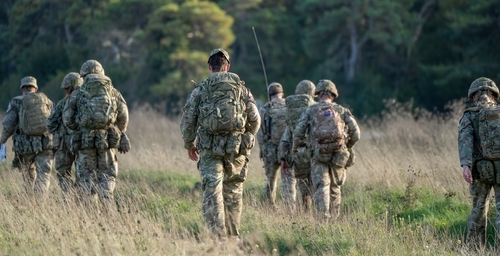
The idea of a British contingent deployed to Ukraine after a ceasefire is being framed as a stabilisation measure—monitoring, training, and providing “security guarantees.” But the distinction between a peacekeeping force and a forward‑deployed NATO presence is wafer‑thin. Once British troops are on Ukrainian soil, they become a standing tripwire. Any Russian strike—accidental or deliberate—instantly becomes a crisis involving the UK directly.
And yet, despite the gravity of such a commitment, the public debate is anaemic. There is no clarity on troop numbers, mission scope, rules of engagement, or duration. We are being asked to accept the principle first and the details later, as though the details aren’t the difference between a symbolic deployment and a slow march into a proxy war.
A democracy cannot outsource decisions of this magnitude to diplomatic communiqués and ministerial press lines. If Britain is to consider placing its soldiers in the theatre of a still‑live conflict, the public deserves a full, open argument—not a fait accompli.
2. Project Nightfall: escalation by design
If the peacekeeping proposal is the quiet deployment, Project Nightfall is the loud one. The Ministry of Defence has announced a new tactical ballistic missile programme with a range of 500–600 km, a 200–300 kg warhead, and the explicit purpose of enabling Ukraine to strike “deep inside Russian territory”.
This is not defensive kit. This is not humanitarian support. This is a bespoke offensive capability designed to hit Russian military infrastructure far beyond the front line.
The specifications alone tell the story:
- 500–600 km range—enough to reach well into Russia
- High‑explosive warhead capable of strategic damage
- Rapid‑launch, rapid‑withdrawal systems to evade counter‑battery fire
- Production targets of 10 missiles per month—a sustained supply line, not a token gesture
The Independent reports that the programme is a direct response to Russia’s use of hypersonic missiles near the Polish border, with the UK positioning Nightfall as a way to “fight back” and raise the cost for Moscow.
But raising the cost for Moscow is not the same as making Britain safer. In fact, it risks the opposite. When a state supplies weapons designed for deep‑strike operations against another nuclear power, it cannot credibly claim to be a neutral supporter. It becomes part of the escalation ladder.
3. The case for armed neutrality: principled, pragmatic, overdue
Armed neutrality is not pacifism. It is not withdrawal. It is a disciplined strategic posture built on three pillars:
A. Absolute defence of our own territory
Britain should maintain strong, modernised armed forces capable of deterring any direct threat. That includes investment in air defence, cyber resilience, and domestic industrial capacity—not expeditionary missile programmes designed for someone else’s war.
B. Humanitarian and diplomatic support without entanglement
We can support Ukraine with humanitarian aid, reconstruction funds, refugee protection, and diplomatic pressure. These are meaningful contributions that do not require us to become a party to the conflict.
C. A clear red line: no deployments, no offensive systems, no entanglement
No British troops in Ukraine. No bespoke offensive weapons designed for deep‑strike missions. No open‑ended commitments that blur the line between ally and combatant.
This is not moral abdication. It is strategic clarity.
4. Why neutrality protects Britain—and Ukraine
1. It reduces the risk of catastrophic miscalculation
The more Britain tailors weapons and deployments to Ukrainian offensive needs, the more Moscow will treat Britain as a direct participant. Neutrality lowers the temperature and reduces the incentive for Russia to target British assets in retaliation.
2. It preserves our limited military capacity
The UK’s armed forces are already stretched. Committing to a long‑term deployment or a major missile‑production pipeline for Ukraine diverts resources from domestic defence at a time when our own resilience is fragile.
3. It forces honesty about our strategic priorities
Are we building missiles because they make Britain safer—or because they make Britain feel relevant? Are we deploying troops because it is necessary—or because it is politically convenient?
Neutrality demands that we answer those questions plainly.
5. The drift must stop now
Britain is not being marched into war. It is drifting—step by step, announcement by announcement, missile by missile—toward a role it has not debated and has not consented to.
If we are to avoid becoming a co‑belligerent by stealth, we need a national conversation grounded in realism, not rhetoric. And we need to draw a line now, before the next “support package” becomes the next irreversible commitment.
Armed neutrality is not a retreat. It is a refusal to let Britain’s security be mortgaged to decisions made in Moscow, Kyiv, Brussels, or Washington. It is a recognition that supporting Ukraine does not require sacrificing our own strategic autonomy.
And above all, it is a reminder that the first duty of any government is to its own people—not to the momentum of a war it cannot control.
By Pat Harrington
Sources
The Independent – “UK announces Project Nightfall to provide Kyiv with new missiles” TheDefenseNews.com – “UK Launches Project Nightfall: Britain’s Own Tactical Ballistic Missile Plan” DefenseFeeds.com – “UK Launches Project Nightfall to Build Low‑Cost Missile”
 THIRDWAY THINK-TANK | The Voice of the Radical Centre
Discussion
No comments yet.