Matt Goodwin’s decision to stand for Reform UK in Gorton and Denton has raised eyebrows across the political spectrum. Long seen more as the academic voice of Britain’s realignment rather than a participant in it, his move throws fresh light on the tensions between his own worker‑focused, anti‑elite analysis and the party he has chosen to champion.
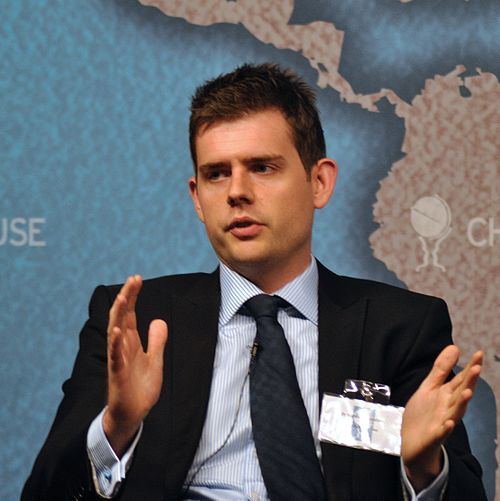
When we look at recent defections to them, they appear to be Thatcher‑worshipping free‑marketeers
Matt Goodwin isn’t. He has spent more than a decade arguing that Britain’s political realignment is being driven not by free‑market ideology but by a large, overlooked bloc of voters who feel ignored by the political class. As he put it in National Populism: The Revolt Against Liberal Democracy (2018):
“Large numbers of people feel they have been marginalised, ignored or held in contempt by elites.”
He has written extensively about how there is a “forgotten electoral tribe” (the Somewheres) who are centre‑right on social issues but centre‑left on economics. In Values, Voice and Virtue (2023), he argues:
“The gap between the values of the new elite and the values of the wider public has never been greater.”
What does that mean? It means that they will oppose diversity‑based hiring, yet also support protection against unfair dismissal. They’ll oppose trans‑identity teaching in schools, but they’ll not wish to have to fork out for private education because they cannot afford it.
They’ll back renationalisation of utilities and price controls — the opposite of Tory policy in the 1980s.
They are mainly “Old Labour” voters who have seen the Labour Party replace concern for workers with identity and liberal policies favoured by middle‑class leftist graduates. Goodwin’s early work on UKIP made this point clearly. In Revolt on the Right (2014), he wrote:
“UKIP’s support is rooted in deep‑seated social and value divides that the main parties have failed to address.”
This is how the Red Wall narrative was created — by Matt Goodwin and others (David Goodhart, Philip Blond, Jon Cruddas, Lord Glasman). Goodwin’s argument that this realignment is structural, not temporary, is summed up in another line from National Populism:
“National populism is not a momentary spasm but a sustained political force.”
So “Blue Labour/Red Tory” became interchangeable as methods of creating a social conservatism of the left — something to counter‑balance the social and economic liberalism of what Goodwin calls, in Values, Voice and Virtue, the “new elite”:
“Britain is increasingly shaped by a new elite that is more liberal, more global, and more detached from the values of the majority.”
Who has tapped into this?
George Galloway has, with his “Old Left” and unapologetically anti‑Woke Workers Party.
William Clouston has, with the rebranding of the SDP as something quite different from the SDP of old (the Gang of Four including arch‑social liberals Shirley Williams and Roy Jenkins). Today’s SDP is Eurosceptic and socially conservative — more Peter Shore or Austin Mitchell than Tony Benn or Michael Foot.
But one may ask: why did Matt Goodwin not gravitate to Clouston or Galloway? Or maybe talk to the Populist Party or National Distributist Party, who are promoting similar ideas with allies in the Belmont Accord?
The problem, as ever, is that big money controls politics. Minor parties struggle to get funds not because their message is at fault. Quite the opposite. They are principled, not prepared to be bought by donors who seek to control whichever party looks like it will hold the reins of power.
And that’s where we are with Reform UK — Conservative donors backing a new horse as the Tory stallion turns into a lame donkey.
All the while, we have Matt Goodwin embarking upon a campaign to win Gorton and Denton for a party that barely resembles the template of politics he wrote about in his books.
But he is new to party politics, and regardless of the result on February 26th, he is just 44 years of age with time on his side. If Farage does not do a “Rupert” on him (Rupert Lowe forced out for criticising Farage), he can become a potential successor to Farage as the leader of the “New Right.” He can even change the “New Right” to become syncretic — a mix of social conservatism, Distributist protectionist economics, and isolationist foreign policy.
The world is his oyster in that regard, because his books are the blueprint — and they promote a different vision from Reform’s. One that is workerist and strongly anti‑establishment. I suspect (or should I say “hope”) that this is his long‑term game: Reform UK as the vehicle, but with Clouston’s syncretic SDP, plus Lowe and other economic‑nationalist figures as allies in building a new movement when Reform UK inevitably returns to the Tory fold.
Russell White is the leader of the Populist Party
 THIRDWAY THINK-TANK | The Voice of the Radical Centre
Discussion
No comments yet.