How the U.S.–Israel–Iran confrontation is remaking the rules of war — and why the legal fallout may matter as much as the missiles
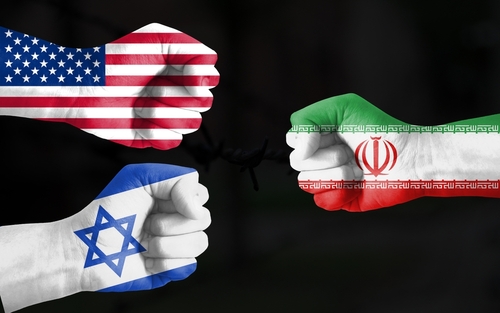
The latest escalation between the United States, Israel and Iran did not erupt from nowhere. It is the culmination of years of covert operations, proxy clashes, nuclear brinkmanship and political choices that steadily eroded the guardrails meant to prevent exactly this kind of crisis. What makes the current moment so consequential is not only the violence itself but the way it challenges the foundations of international law — and the growing sense among many observers that the strikes and the public comments accompanying them carried both an explicti and implicit aim of regime change in Tehran.
The long fuse: how the confrontation was built
The path to the present conflict runs through several overlapping dynamics. Israel has long viewed Iran’s nuclear programme as an existential threat and has repeatedly used covert sabotage and targeted operations to slow it, including assasintions. The United States, meanwhile, has oscillated between diplomacy and confrontation, with periods in which the use of force against Iran became increasingly normalised. Joint U.S.–Israeli strikes in recent years, including deep inside Iranian territory, marked a significant escalation and occurred even as diplomatic channels remained open.
Iran’s responses — missile launches, drone attacks, and intensified support for regional proxies — hardened positions in Washington and Jerusalem. Each side came to see the other as operating outside the bounds of predictable state behaviour, and each justified its own actions as defensive necessity.
The case for war — and its weaknesses
U.S. arguments
American officials have framed their actions around three themes: self‑defence against Iranian‑backed militias, deterrence after years of perceived Iranian escalation, and preventing Iran from advancing its nuclear capabilities. These arguments rely heavily on broad interpretations of self‑defence and on domestic legal authorities originally designed for different conflicts. Critics note that neither the 2001 nor 2002 Authorisations for Use of Military Force clearly apply to Iran, raising questions about constitutional legitimacy as well as international legality.
Israeli arguments
Israel’s rationale is more existential in tone. Leaders have argued that Iran’s nuclear ambitions pose a direct threat to national survival and that pre‑emptive strikes are necessary to prevent a catastrophic attack. They also point to Iran’s support for groups such as Hezbollah and Hamas as evidence of a persistent and intolerable threat. Yet legal scholars have questioned whether the threshold for lawful self‑defence — particularly the requirement of imminence — was met before Israel’s major strikes, especially those launched while diplomatic negotiations were still active.
A sharper critique: why the strikes matter legally
The strikes by the U.S. and Israel raise several concerns that go beyond the immediate conflict.
- Imminence stretched beyond recognition: International law requires a threat to be imminent for force to be justified in self‑defence. Many analysts argue that neither Washington nor Jerusalem demonstrated such imminence, making the strikes difficult to reconcile with the UN Charter.
- Diplomacy sidelined: Launching major attacks during ongoing negotiations signals that military action, not diplomacy, was the preferred tool. This undermines the principle that force should be a last resort.
- Leadership targeting as a new normal: Strikes aimed at senior Iranian figures push the boundaries of accepted practice and risk normalising leadership decapitation as a tool of statecraft.
- Precedent for powerful states: If these actions go unchallenged, they may effectively weaken the prohibition on the use of force, creating a world in which powerful states feel freer to act unilaterally.
The concern expressed by many legal experts is not simply that the strikes may have violated existing rules, but that they may reshape those rules by example.
The future of international law: erosion or renewal?
The international legal order has always depended on a mix of formal rules and informal restraint. When major powers act outside those rules without consequence, restraint becomes harder to sustain. Several trajectories are possible:
- Normalisation of unilateral force: Other states may conclude that the Charter’s limits are optional, especially if they possess sufficient military or political power.
- Two‑tier legality: Smaller states may find that the protections of international law apply unevenly, encouraging them to seek security through arms and alliances rather than norms.
- Symbolic pushback: International bodies may condemn the strikes, but without enforcement mechanisms, such responses may do little to restore confidence in the system.
- Reform efforts: Some states may push for clearer definitions of self‑defence, stricter rules on leadership targeting, or mechanisms to reduce Security Council paralysis. These efforts face significant political obstacles but could help preserve the credibility of the legal order.
The stakes are high: the future of international law may hinge on whether the global response treats the strikes as an aberration or an acceptable precedent.
Regime change: implicit aim, uncertain outcome
Is regime change the goal?
While not always stated openly, the pattern of actions — deep strikes, leadership targeting, economic pressure and political isolation — aligns with strategies historically associated with attempts to destabilise or replace a government. Analysts have noted that such measures often reflect at least a latent desire for regime change, even if framed in terms of deterrence or non‑proliferation.
Is regime change likely?
External attempts to force regime change have a poor record. Authoritarian systems often respond to external pressure with increased repression and nationalist mobilisation. Iran’s political structure, with its security apparatus and ideological cohesion, is designed to withstand shocks. A sudden collapse is possible but not probable; prolonged instability is more likely.
Is regime change desirable or necessary?
Arguments that regime change is necessary typically rest on claims that no diplomatic solution is possible with the current leadership. Yet past agreements have shown that negotiated constraints on Iran’s nuclear programme are achievable. Forced regime change carries significant risks: civil conflict, regional spillover, and long‑term instability. Many observers argue that it is neither necessary nor likely to produce the strategic outcomes its proponents hope for.
What could have been done differently?
Several alternatives were available before the strikes:
- Sustained diplomacy: Negotiations were ongoing, suggesting that diplomatic avenues had not been exhausted.
- Regional security frameworks: Multilateral arrangements involving Gulf states, Turkey and European partners could have reduced tensions.
- Conditional sanctions relief: Economic incentives have previously influenced Iranian behaviour and could have been used more strategically.
- Transparency and coalition‑building: Sharing intelligence with allies and international bodies might have built broader legitimacy for any action deemed necessary.
- Domestic legal processes: Seeking explicit legislative authorisation would have strengthened the legitimacy of U.S. actions and reinforced constitutional norms.
These options were not guaranteed to succeed, but they offered pathways that aligned more closely with international law and reduced the risk of escalation.
The central question now is whether the international community treats this moment as a warning or a precedent. The choices made in the coming months will shape not only the trajectory of the U.S.–Israel–Iran confrontation but the credibility of the legal order that has governed the use of force for decades.
By Pat Harrington
Advert

 THIRDWAY THINK-TANK | The Voice of the Radical Centre
Discussion
No comments yet.