Introduction
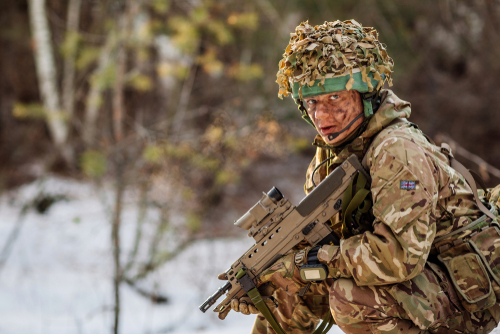
Prime Minister Sir Keir Starmer has advocated for greater European military involvement in Ukraine, potentially including British troop deployments following a ceasefire. This proposal raises significant concerns about the dangers, costs, and justifications of UK involvement. Opponents, including former military leaders and anti-war campaigners, have questioned both the feasibility and necessity of such action. Given the lack of clear strategic benefit to the UK, the risks of escalation, and the potential for further instability, the UK should refrain from sending troops and instead focus on diplomatic resolutions.
The Risks of Troop Deployment
- Escalation of Conflict: Deploying UK troops in Ukraine could provoke a direct confrontation with Russia. As former Army Chief Lord Richard Dannatt has warned, Britain lacks the forces and equipment to sustain a peacekeeping mission in Ukraine at a “considerable cost.” If British soldiers come under attack, the UK would be drawn further into the conflict, risking a wider war that could entangle NATO despite the US explicitly stating that any UK deployment would not be covered by NATO’s mutual defense clause.
- Threat of Nuclear War: The Campaign for Nuclear Disarmament (CND) has pointed out that the push for NATO membership for Ukraine has been a key driver of the conflict. By reinforcing the UK’s military presence in Ukraine, Starmer risks escalating tensions with a nuclear-armed Russia. This reckless strategy could increase the likelihood of a catastrophic confrontation.
- Lack of Military Resources: The British military is already stretched thin. According to Lord Dannatt, the UK lacks the personnel and equipment necessary to effectively “police” Ukraine. Given that even Poland—Ukraine’s neighbor—has ruled out sending troops, the UK’s insistence on greater involvement is both impractical and dangerous.
- Unpopular and Unjustified War Effort: Anti-war campaigners such as Lindsey German from the Stop the War Coalition argue that Starmer’s proposal is an attempt to “save face” after being blindsided by the US decision to hold peace talks with Russia. Given that the US itself has no plans to send troops, why should the UK bear the burden? The notion that Russia poses a threat to all of Europe is exaggerated—Russia’s economy is roughly the size of Spain’s, making a continent-wide invasion implausible.
- Economic and Social Costs: Sending troops to Ukraine would divert funds from critical domestic issues such as healthcare, education, and infrastructure. The UK is already facing economic challenges, and a costly military intervention with no clear benefit to British national security would be an irresponsible use of public resources.
Questioning the Strategic Justification
- Why is Ukraine a UK Priority? Starmer has framed Ukraine’s defense as vital to the UK’s national security, yet there is little evidence to support this claim. Peace or war in Ukraine does not directly impact the UK’s safety or economic stability. The conflict is primarily a regional dispute between Ukraine and Russia, and European security is not dependent on the UK’s intervention.
- A Divided European Response: Not all European leaders are aligned with Starmer’s vision. Hungarian Foreign Minister Peter Szijjarto accused the UK and other European leaders of actively preventing a peace agreement. The fact that most Nordic nations did not attend the emergency summit in Paris further underscores the lack of unified European support for greater militarization.
- The US Stance: Notably, the US has engaged in direct talks with Russia while excluding European allies, signaling that Washington does not prioritize indefinite military support for Ukraine. If the US—Ukraine’s biggest backer—is seeking a settlement rather than further escalation, why should the UK take a more aggressive stance?
Alternative Approaches
Rather than risking British lives and resources in Ukraine, the UK should:
- Prioritize Diplomacy: The UK should push for diplomatic resolutions rather than military escalation. If the US is engaging in talks with Russia, the UK should support efforts for a negotiated peace rather than prolonging conflict.
- Support Humanitarian Aid: Rather than sending troops, the UK could focus on humanitarian support to all of the victims of the conflict.
- Avoid NATO Expansionism: NATO membership for Ukraine has been one of the primary sources of tension. By pushing for Ukrainian neutrality, the UK can help create the conditions for a lasting peace rather than deepening hostilities.
Conclusion
Starmer’s proposal to send UK troops to Ukraine is reckless, unnecessary, and strategically flawed. It risks escalation, nuclear confrontation, and economic strain while lacking clear benefits for British security. With opposition from military leaders, anti-war campaigners, and some European governments, it is clear that the UK’s best course of action is to avoid military entanglement and instead advocate for diplomatic solutions to the conflict.
By Patrick Harrington
 THIRDWAY THINK-TANK | The Voice of the Radical Centre
Discussion
No comments yet.